Civil Partnership vs Marriage UK: Rights, Differences and Legal Comparison Explained

Civil partnership vs marriage is one of the most frequently searched legal comparisons for couples in the United Kingdom. Both options offer formal recognition of a relationship, providing legal rights, financial protection, and emotional security. However, many people still feel confused about how each structure works and which one may be more suitable for their circumstances.


Civil partnership vs marriage also reflects how modern UK law has evolved to support different types of relationships. While marriage has deep historical and cultural roots, civil partnerships were introduced to provide equal legal protection without traditional or religious expectations. Although they are similar in law, their formation and social perception can differ significantly.
What is civil partnership vs marriage in the UK
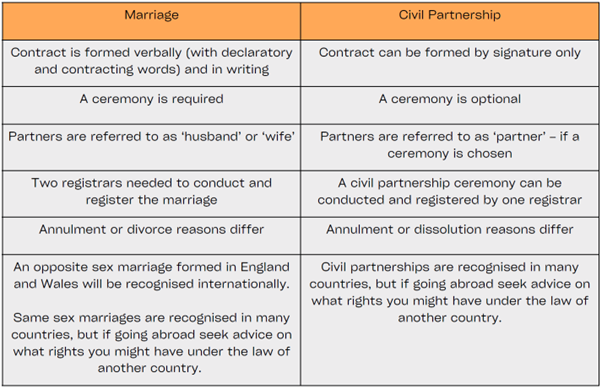
Understanding civil partnership vs marriage in the UK begins with how each relationship is created. Marriage can take place through either a civil or religious ceremony, where vows are exchanged in front of witnesses. Civil partnerships, on the other hand, are formed through a legal registration process involving the signing of documents rather than spoken vows.
In practice, civil partnership vs marriage in the UK results in almost identical legal recognition once the relationship is registered. Both arrangements provide strong legal protection in areas such as property ownership, inheritance rights, and financial security. The main difference lies in the symbolic and ceremonial nature of how the relationship is officially formed.
Legal similarities in civil partnership vs marriage
One of the most important aspects of civil partnership vs marriage is that both provide nearly equal legal rights in the UK. Couples in either arrangement are treated similarly under family law, especially when it comes to inheritance, taxation, and pension benefits. This legal equality ensures that both relationships are secure and protected.
Civil partnership vs marriage also ensures equal recognition in critical situations such as medical emergencies and next-of-kin decisions. Whether a couple is married or in a civil partnership, the law recognises their partner as having legal authority in many personal and financial matters, making both options highly secure for long-term commitment.
Key differences in civil partnership vs marriage

The key differences in civil partnership vs marriage are mostly related to terminology and ceremony structure rather than legal rights. Married individuals are referred to as spouses, while those in civil partnerships are called civil partners. Although this distinction may seem minor, it can influence how relationships are viewed socially and internationally.
Another difference in civil partnership vs marriage is the way each relationship is ended. Marriage is legally dissolved through divorce, while a civil partnership is ended through dissolution. The legal process is similar, but the terminology and emotional perception can vary depending on personal and cultural expectations.
Civil partnership vs marriage tax implications
When examining civil partnership vs marriage from a financial perspective, tax treatment is largely the same in the UK. Both married couples and civil partners benefit from allowances such as inheritance tax exemptions and pension-related benefits. This ensures that neither relationship has a significant financial advantage over the other.
Civil partnership vs marriage tax rules are designed to promote fairness and equality. Whether couples are married or in a civil partnership, they can benefit from shared financial planning opportunities. This includes tax reliefs and allowances that support long-term financial stability and estate planning.
Civil partnership vs marriage pros and cons
Looking at civil partnership vs marriage pros and cons helps couples make informed decisions based on personal values. Marriage often offers stronger cultural and international recognition, as it is widely understood across most countries. It may also include religious or traditional ceremonies, which some couples find meaningful.
Civil partnership vs marriage also presents advantages for civil partnerships, such as a modern and non-religious approach to legal commitment. However, one potential disadvantage is that civil partnerships may not be recognised in all countries, which can affect couples who travel or live abroad for work or personal reasons.
Civil partnership vs marriage in Scotland and UK regions
Civil partnership vs marriage in the UK can vary slightly depending on the region, particularly in Scotland. While the legal framework remains broadly similar across England, Wales, Scotland, and Northern Ireland, each region has its own administrative procedures for registration and ceremony arrangements.
In Scotland, civil partnership vs marriage is governed by specific local laws that align closely with UK-wide legislation. However, minor differences in documentation and registration processes may exist. Despite these variations, the legal rights and protections remain consistent across the UK as a whole.
International recognition of civil partnership vs marriage
Civil partnership vs marriage is recognised differently around the world, which is an important factor for couples who travel or relocate. Marriage is generally accepted in most countries, making it a more universally recognised legal status. Civil partnerships, however, may not always receive the same level of recognition internationally.
When considering civil partnership vs marriage globally, couples should be aware that legal rights may change depending on the country they are in. Some nations fully recognise both relationships, while others only acknowledge marriage. This makes international legal planning an important consideration for long-term security.
Which is better: civil partnership vs marriage
Deciding between civil partnership vs marriage depends largely on personal preference rather than legal benefits. Since both options offer almost identical rights in the UK, the decision often comes down to ceremony style, cultural values, and emotional significance rather than financial or legal advantage.
Civil partnership vs marriage should be viewed as two equal but different paths to legal recognition. Couples who prefer tradition and global recognition may choose marriage, while those seeking a modern, non-religious option may prefer civil partnerships. Ultimately, both provide strong legal protection and security.
Conclusion
Civil partnership vs marriage continues to be an important topic for couples in the UK who want clarity about their legal rights and responsibilities. While both relationships are almost identical in terms of legal protection, they differ in ceremony, terminology, and international recognition.
In summary, civil partnership vs marriage offers two valid and secure options for couples seeking formal commitment. The choice depends on personal values, lifestyle preferences, and future plans rather than legal necessity, as both ensure equal rights under UK law.